

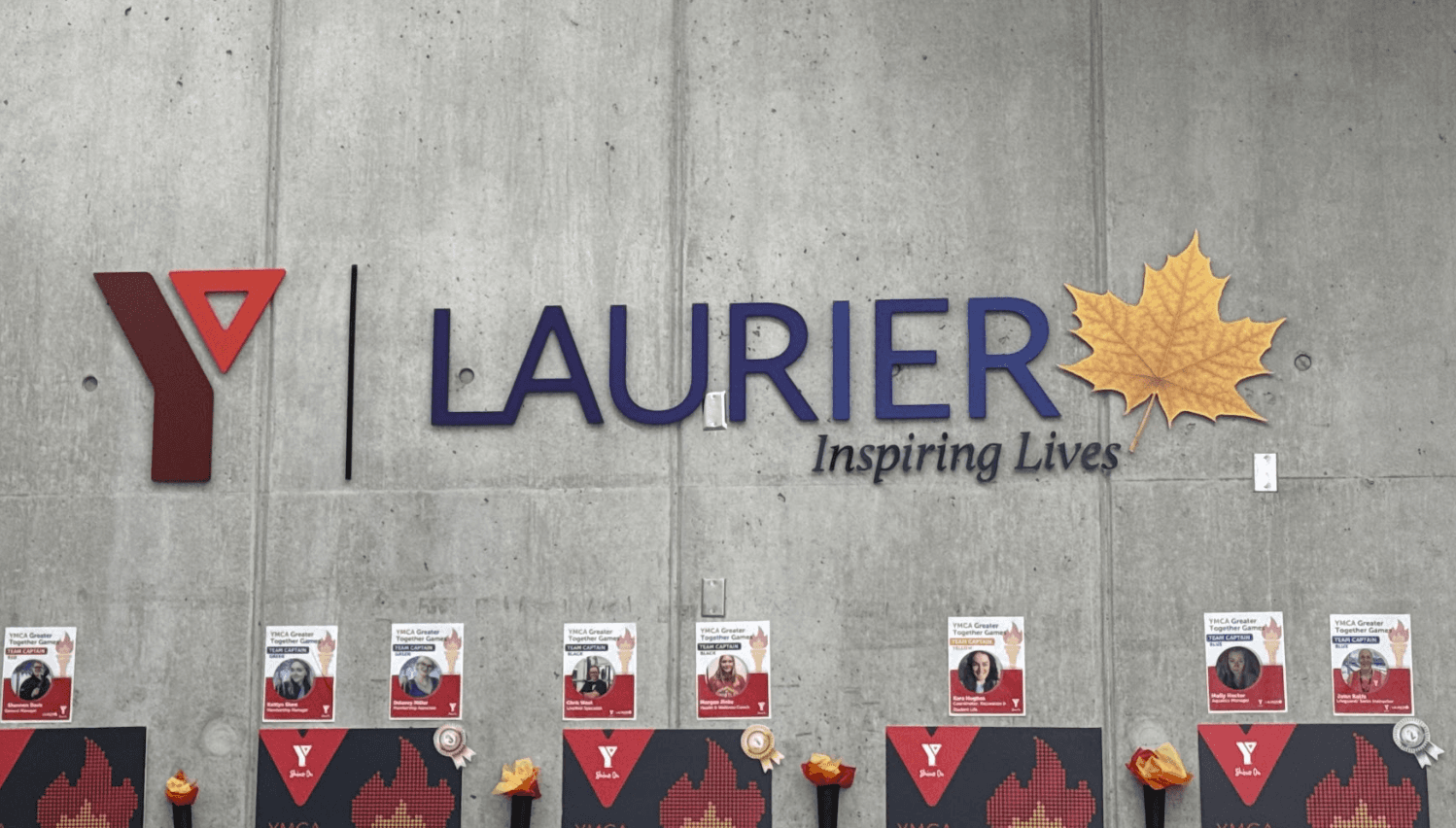
When BHNCDSB Students Redesigned Youth Wellness for the YMCA
Some of the best thinking we saw this semester came from high school students who had never set foot in a university before. At Wilfrid Laurier University's Brantford campus, students from three schools spent a day redesigning how the YMCA could support teen mental health.
The challenge came from the Laurier Brantford YMCA directly. This wasn't a hypothetical exercise. It was a conversation the organization is genuinely having, and they invited students to be part of it.
The Futures Thinking Challenge
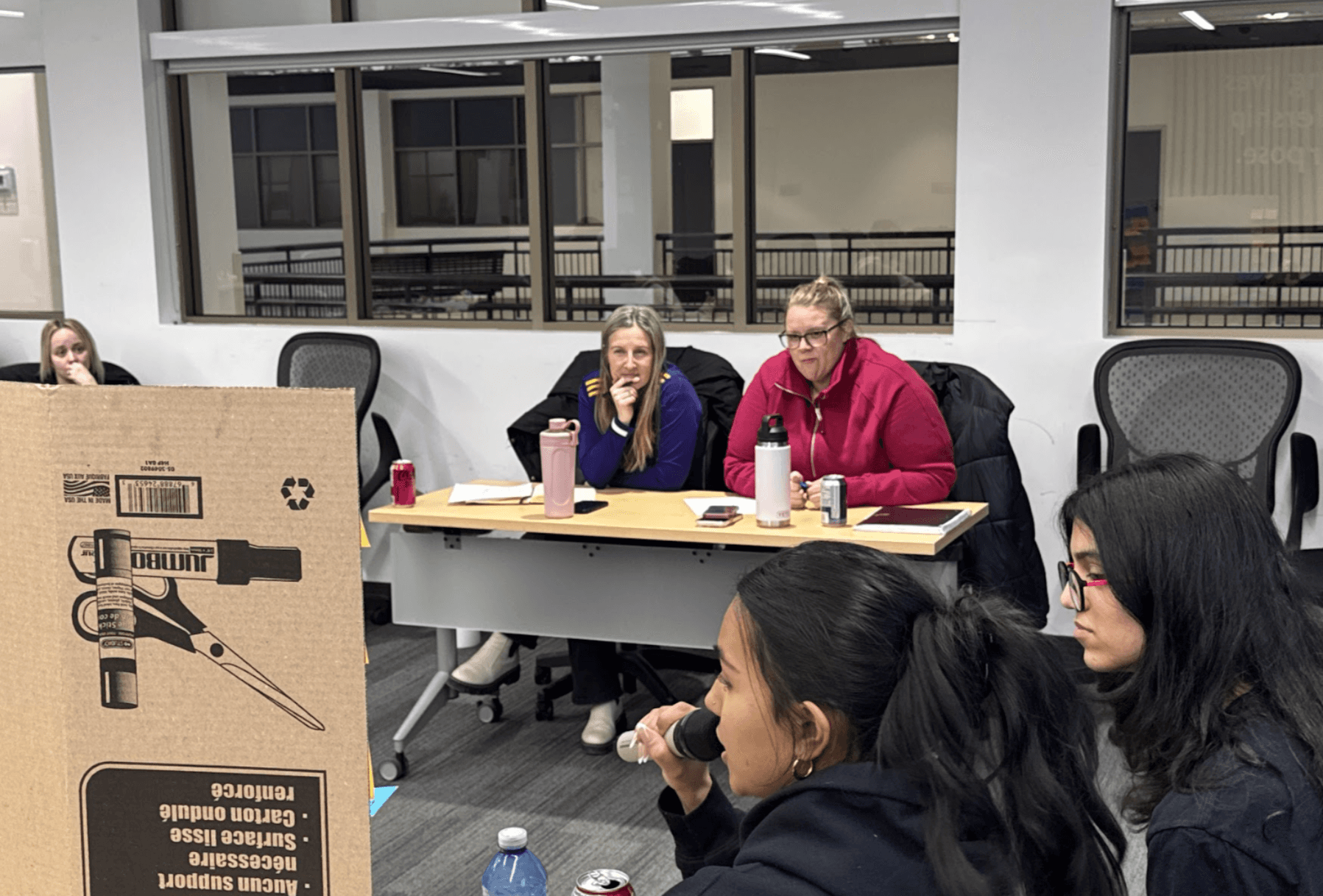
Students from Assumption College, Holy Trinity, and St. John's College (all Brant Haldimand Norfolk Catholic District School Board) arrived at the Brantford campus for a full-day futures thinking workshop. The brief was grounded in something real: the YMCA already plays a meaningful role in youth fitness and active living in the community. The question put to students was what comes next.
The challenge asked students to design a Youth Wellness Hub concept. They needed to think about how the YMCA could expand into mental health awareness and early prevention for teens. They defined the space and its atmosphere, making it feel safe, welcoming, and stress-reducing without feeling clinical. They added activities designed to build healthy habits and make teens want to return. They showed how the space could remain inclusive, accessible, and supportive for everyone who walks through the door.
Each team had to deliver a 60-second pitch at the end of the day. Real constraints, real stakeholders, and a clear deliverable changed what the experience meant for students.
Why the YMCA Partnership Worked
Kristin Fernandes, Manager of Interuniversity Sport and Recreation, and Shannon Davis, General Manager of the Laurier Brantford YMCA, brought this challenge to students and engaged with their proposals with genuine openness. They listened carefully, asked follow-up questions, and treated student ideas as contributions worth considering.
That dynamic matters. When students know that the person listening to their pitch will actually take their ideas back to the organization, the quality of engagement shifts. Students stopped thinking about what answer would earn a good mark and started thinking about what would actually work. That shift, from performing for a grade to solving for impact, is the heart of what futures thinking workshops are designed to produce.
The YMCA's presence also gave students exposure to careers in community programming, recreation management, and public health that many had not previously considered. Career exploration doesn't always happen through explicit career talks. Sometimes it happens when students see an organization solving problems they care about and realize they could be part of that work.
The University Campus Effect
For many students in this group, this was their first visit to a university campus. That alone carries weight. Walking through a post-secondary environment, seeing lecture halls and common spaces, understanding the scale and feeling of a university, shifts how students think about their own futures.
The Brantford campus of Wilfrid Laurier University provided a setting that felt accessible. It is a campus where students could picture themselves. Combining a meaningful workshop with that campus experience created a day that addressed both career exploration and post-secondary awareness in a single visit.
What Students Took Away
Students left with more than a completed pitch. They practiced design thinking skills: identifying user needs, ideating under constraints, prototyping concepts, and presenting solutions. They practiced collaboration with peers from different schools, working in teams with people they had not met before that morning.
They also engaged with a topic that matters to them personally. Mental health awareness among teens is not an abstract policy issue for high school students. It is their lived experience. Giving students the opportunity to contribute meaningfully to how their community addresses that issue created a level of investment that typical classroom projects cannot replicate.
Some students will pursue careers in community health, recreation, or social services. Others will carry the design thinking and presentation skills into entirely different paths. Both outcomes reflect the purpose of SHSM experiential learning: giving students authentic experiences that inform their decisions about the future.
Thank you to the educators and students from Assumption College, Holy Trinity, and St. John's College for making the trip to Brantford and showing up with exactly the curiosity this kind of work needs.
About LearnIt Solutions
LearnIt Solutions partners with Ontario school boards and independent schools to deliver experiential learning programs and SHSM certifications. We work with 20+ school boards and corporate partners to help students develop real world skills and career clarity. Learn more at www.learn-it.ca.
As part of LearnIt Media, we also amplify education innovation stories through our LearnIt podcast, featuring conversations with Ontario superintendents, principals, and education leaders reimagining student learning.
Founder Dhiraj Hariramani
CEO & Chief Learning Officer, LearnIt Solutions Inc.
Dhiraj founded LearnIt to bridge the gap between classroom theory and career readiness. A UBC graduate and consultant at Accenture, he has directly impacted 10,000+ students across Ontario school boards.
As host of the LearnIt podcast, Dhiraj facilitates conversations with education leaders exploring innovation, equity, and student centered approaches to learning.
Connect: LinkedIn | dhiraj@learn-it.ca | +1 (236) 788 6830
