

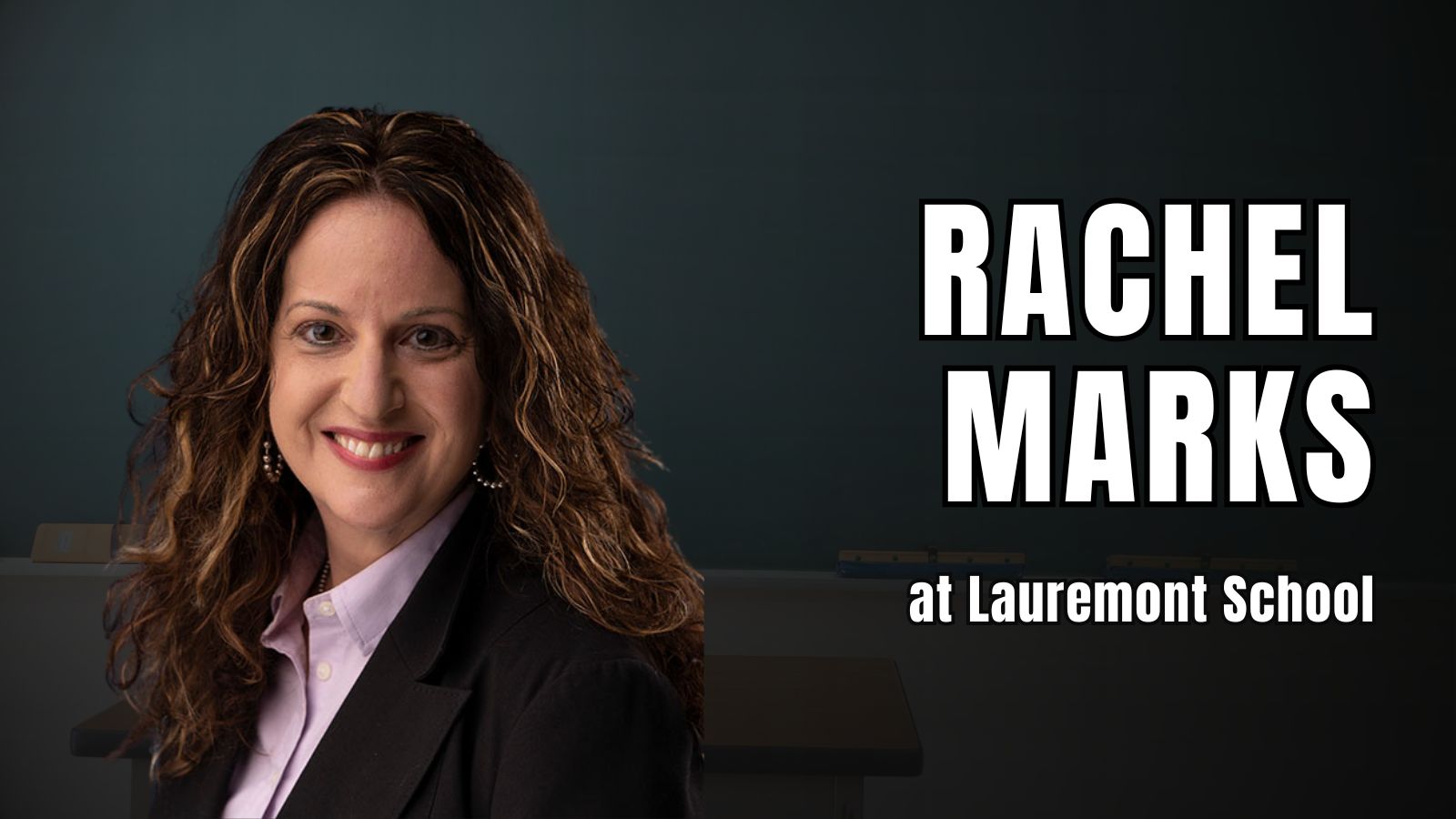
"I Am Known": Lauremont School’s Rachel Marks on Belonging
The Deputy Head of School Rachel Marks at Lauremont School in Richmond Hill, Ontario has spent nearly three decades learning one lesson above all others: that when people feel they genuinely matter, everything else in a school tends to take care of itself.
Rachel Marks didn't plan to spend 28 years at the same school. She was deciding between law and teaching when a friend pulled her into a Montessori classroom in Toronto. A four-year-old offered her a chair. A three-year-old brought her water. The children carried on with their work, and Rachel couldn't locate the teacher anywhere in the room.
"I didn't even realize I had spent 90 minutes, almost two hours sitting in the classroom," she recalls. "I was so taken by the Montessori method. I had never heard about it before."
She walked out and went straight to the front office. A mentor told her applications were due the next day and one spot remained. Rachel got her paperwork in. She never thought about law school again.
She is now Deputy Head of School at Lauremont School in Richmond Hill, Ontario, formerly Toronto Montessori Schools, which rebranded in 2024 to reflect its "Montessori Start, IB Finish" philosophy.
The Golden Thread
Lauremont's lower school runs from 18 months through Grade 6 as a Montessori environment. The upper school, seven kilometers north, delivers the IB Middle Years and Diploma Programmes for Grades 7 through 12. Rachel describes the through-line between them as "the pedagogical golden thread."
She frames it as a progression. In the early years, the work is about helping students help themselves. In elementary, it becomes about helping others. In the upper school, it opens outward: how do I help others in the community, and then the world.
"We're doing for others because we want to, not because we're asked to," she says. "It's almost like an innate quality that is instilled at such a young age."
The graduation point of this thread: alumni who leave as self-advocates, sitting in the front row of university, raising their hand to find the professor. "Leadership doesn't have to necessarily be leading an organization," Rachel says. "It's leading yourself."
I Am Known
Lauremont operates under a phrase Rachel returns to throughout the conversation: I am known.
It is more than a motto. It is a commitment to understanding not just where a student sits academically but what drives them, what they celebrate at home, who they are. When asked what she genuinely shares with families considering the school, she does not reach for a list of credentials.
"We don't ever want a child or a family to fit into Lauremont," she says. "That's too much work. We want to know you've come because we can make sure that this is your home and this is your community."
She tells a story about her own son. He was a writer from his earliest years at the school. His Grade 3 teacher saw it and helped him start the school newspaper. He became a journalist. His teacher, when he graduated, said she had seen it coming from those early stories.
To bring this philosophy into her new role, Rachel created something called Cups with the Deputy Head. No agenda. A coffee bar. Parents come in and talk. She just wants to get to know them.
"I love just the open time of just being together," she says. "Just the authentic conversations."
What the Pi Contest Revealed
There is a competition at Lauremont each year in Grades 4, 5, and 6. Students memorize digits of pi and advance through semifinals and finals.
One year, a new student who was struggling to connect socially discovered the Pi Contest. He started memorizing. He started practicing at recess with classmates. He started making friends. He made the semifinals, then got nervous and missed a digit. He did not advance.
His classmate, who did advance, went to the teacher before the final round. He had been watching the new student practice every single day. He offered his own spot.
"Nobody does this," Rachel says. The new student competed in the final. He won. Years later, both boys are in the upper school and close friends.
Rachel tells this story when someone asks how she knows the school's values are actually taking root. She does not point to a curriculum document.
"That kindness that came out," she says. "That's how I know."
Building a Network for Women Who Needed One
Several years ago, Rachel and a colleague noticed there was not much structured space for women across CIS and CAIS Ontario to find each other. A women-focused event they had attended had dissolved during the pandemic. They contacted the organizers, reached out to Sarah Craig at CIS, and said they wanted to start something.
What emerged was Uplift LiftUp, now in its fifth year. It has included author talks, a session on saboteurs, and panel discussions with senior school leaders from across the independent school community. Women told them what they actually wanted: to hear from other women, to talk to each other, to find mentors and sponsors.
Rachel is candid about the picture. Heads of school positions have historically skewed toward men. But in a recent Deputy Head and Head of School course, 16 of the 20 participants were women. She sees forward momentum, without overstating it.
Her own path to the Deputy Head role did not follow a plan. The position was newly created. She had not anticipated it. She had loved her work as Head of Elementary and was not looking to leave.
"Opportunity and timing never align," she says. "So I think when the opportunity comes up, you just step right into it."
What Thirty Years Actually Teaches You
The version of Rachel who walked into that classroom in her early twenties was, by her own account, a fast problem-solver. Reactive. She wanted the answer before anyone asked the question.
"I realized the value of community and relationships and how you can do anything when you have that partnership," she reflects. "Realizing the value of people and relationships first, everything else falls naturally after."
The shift has been toward slowing down. Toward saying tell me more rather than here is what you need to do. Toward being comfortable saying I don't know. She references Simon Sinek and the idea of being available for your team, not as an open door policy but as a quality of presence the people around you can actually feel.
When asked what she wants most to be remembered for, she does not pause long.
"That people knew that they mattered in my presence."