

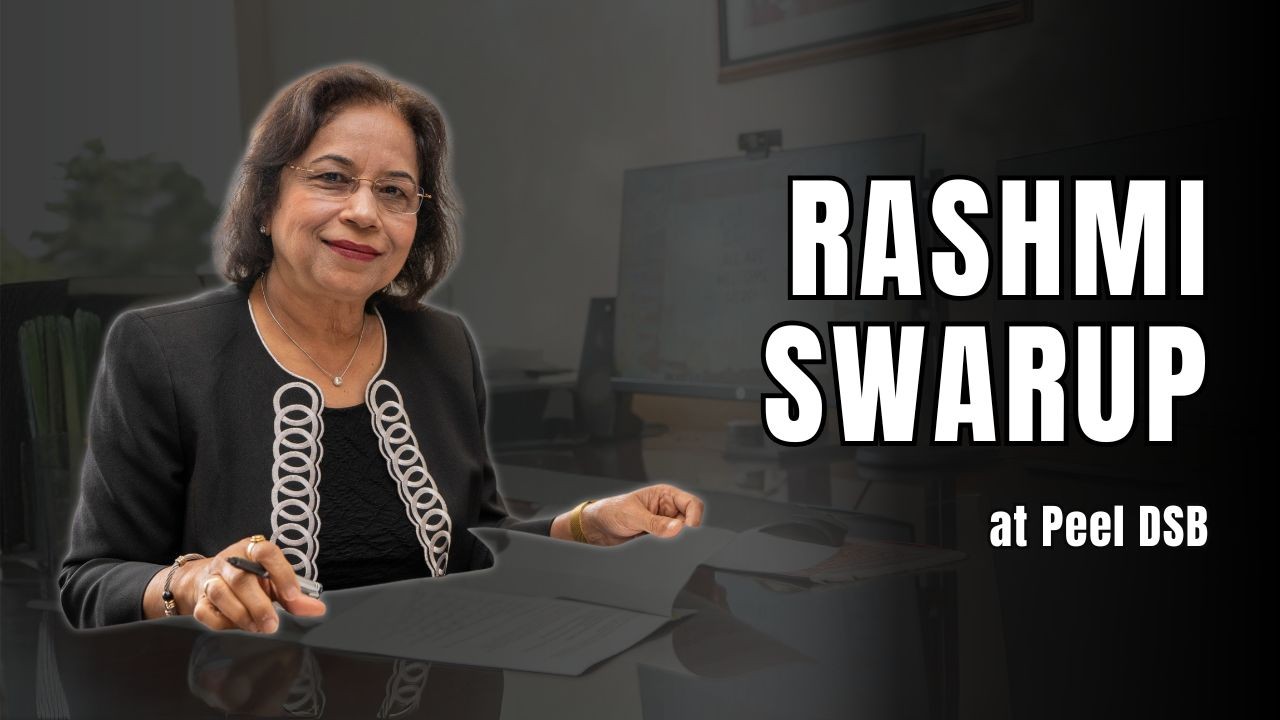
Leading with Heart: Rashmi Swarup on Transforming Education Through Equity, Innovation, and Student Voice
Peel District School Board’s Director of Education, Rashmi Swarup, shares powerful reflections on inclusive leadership, childhood curiosity, and the future of public education.
What does it take to lead one of Canada’s largest and most diverse school boards? According to Rashmi Swarup, it starts with empathy, equity, and a relentless belief in the potential of every child.
In a recent episode of The LearnIt Podcast, host Dhiraj Hariramani sat down with Swarup, Director of Education at Peel District School Board, to explore her journey from a curious, book-loving child to one of the most respected education leaders in the country.
“I grew up in a very warm and comforting home,” Swarup shared. “My parents instilled strong values in me. Character mattered more than anything.”
That sense of character and doing the right thing even when it is hard has shaped Swarup’s leadership throughout her decades-long career in education. Whether she is talking about rethinking assessment or ensuring culturally responsive classrooms, one thing remains clear: equity is not a side initiative, but the core lens through which she views all decision making.
Equity Is Not a Buzzword. It Is a Responsibility.
Swarup spoke candidly about the responsibility school leaders hold when serving diverse communities. At Peel District School Board, which serves more than 145,000 students from over 170 cultural backgrounds, ensuring every learner feels seen and heard is not optional.
“It is not about treating everyone the same,” she said. “It is about giving everyone what they need to thrive.”
This principle aligns with research from the Ontario Human Rights Commission, which emphasizes the need for identity-affirming spaces in public education. In fact, studies show that students in schools that reflect their identities and lived experiences are more engaged and perform better academically (OECD, 2023).
From Curiosity to Courage: A Leader’s Journey
Swarup’s childhood love for books and nature gave her an early lens into observation, storytelling, and empathy. She describes sneaking into her parents’ bookshelves to read Sherlock Holmes and P. G. Wodehouse, an early sign of the independent thinking and curiosity that would later define her leadership.
She also emphasized the importance of finding joy outside traditional academics.
“I was an outdoor person, gardening, athletics, competitions. My parents were always there cheering me on.”
Today, Swarup champions a well-rounded approach to education, one that balances academic excellence with student voice, mental well-being, and co-curricular development.
Listening to Students. Leading with Purpose.
One of the most powerful moments in the conversation centred on student voice. For Swarup, it is not enough to include students in conversations. They should be co-creators of the learning experience.
“Students are wise,” she said. “They will tell you what is working and what is not. We need to not just hear them, but act on what they say.”
This reflects a growing movement toward participatory education, where students are partners in curriculum development, school culture, and governance. According to the EdCan Network, schools that actively involve student voice report higher levels of engagement and stronger community connection.
The Path Ahead
When asked what excites her most about the future of education, Swarup pointed to innovation. Not just in technology, but in how we think about learning itself.
“Innovation is about mindset. It is about being open to new possibilities and never losing sight of the learner.”
As education leaders across Canada continue to adapt to emerging priorities such as artificial intelligence, experiential learning, and mental health, Swarup’s message is a timely reminder. True innovation begins with values.
In a system that can often feel overwhelmed by change, her clarity stands out: lead with heart, listen deeply, and never stop learning.